


Friday afternoon hits, the group chat wakes up, and the same question shows up again: beach, mountains, wine country, or desert? For travelers, that's a fun problem. For property owners, it's a business question hiding inside a travel decision. The best california weekend getaways aren't just photogenic. They're places people can reach easily, book repeatedly, and justify paying for even when it isn't a major holiday.
That's why California remains such a strong short-break market. In a Visit Anaheim survey on road-trip preferences, 38% of 2,000 Americans chose California as the best state for a road trip. The same survey found that 61% hoped to take more road trips than ever that summer, and respondents said their ideal road trip would last about 4.5 days. That sits very close to classic long-weekend behavior.
For owners and investors, the opportunity is straightforward. California has scale, year-round variety, and a huge menu of drivable trip types, from coastal escapes to wine-country stays to mountain cabins. But not every beautiful destination works equally well as a vacation rental. Some markets have strong guest appeal but difficult operations. Others look less glamorous on social media and produce steadier bookings.
This list focuses on both sides of the equation. If you're planning a quick escape, these are ten of the best california weekend getaways worth your time. If you're evaluating where to buy or how to position a rental, each destination also gets the operator's lens: demand profile, pricing logic, guest mix, and the headaches that can eat your margins.
A Thursday night Tahoe booking usually starts with a simple question. Does the group want ski lifts, the lake, a hot tub, or a town they can walk after dinner? In Tahoe, that choice shapes both the guest experience and the investment case.
This region keeps producing weekend demand because it serves multiple trip types without needing a single peak season. Winter brings ski groups and holiday travelers. Summer fills with families, boaters, and friends splitting larger homes. Spring and fall still have a real booking story if the property feels comfortable for hiking, remote work, and short reset trips rather than just overflow from peak months.
For owners, Tahoe rewards specificity. Generic inventory gets compared on price. Properties with a clear promise, walk-to-lift convenience, lake access, filtered water views, a strong game room, or a polished cabin design, have more pricing power because guests are buying a setting, not just beds.
The best-performing Tahoe homes solve practical problems before guests have to ask.
Practical rule: In Tahoe, operations affect revenue directly. A beautiful home with bad snow logistics often underperforms a less dramatic property that is easier to access and easier to use.
Submarket choice matters as much as design. Tahoe City and Truckee often attract buyers because they give guests recognizable town centers, year-round activity, and easier positioning for short stays. A tucked-away cabin can photograph better and feel more private, but it also brings longer drive times, harder turns, more weather-related support requests, and in some cases a smaller guest pool for quick weekend trips.
That trade-off is where owners make or lose money. Travelers often romanticize isolation. Operators end up paying for it through plowing, maintenance coordination, utility issues, and guest messaging. If you are comparing destinations with that lens, this guide on choosing a location to buy a vacation home is a useful next step.
For travelers, Tahoe remains one of the easiest yeses in California. For investors, it works best as a premium, operations-heavy market where the right location and setup can justify higher rates, but sloppy execution gets exposed quickly.
Big Sur is not a volume play. It's a rate play.
Travelers choose it for dramatic coastline, privacy, and the feeling that the natural surroundings do most of the talking. Owners choose it, or try to, because scarcity supports premium pricing in a way few California coastal markets can match. The catch is that Big Sur can punish sloppy operations. Road access, maintenance, weather exposure, and utility issues matter more here than they do in easier beach towns.
Before the strategy, the appeal is obvious.
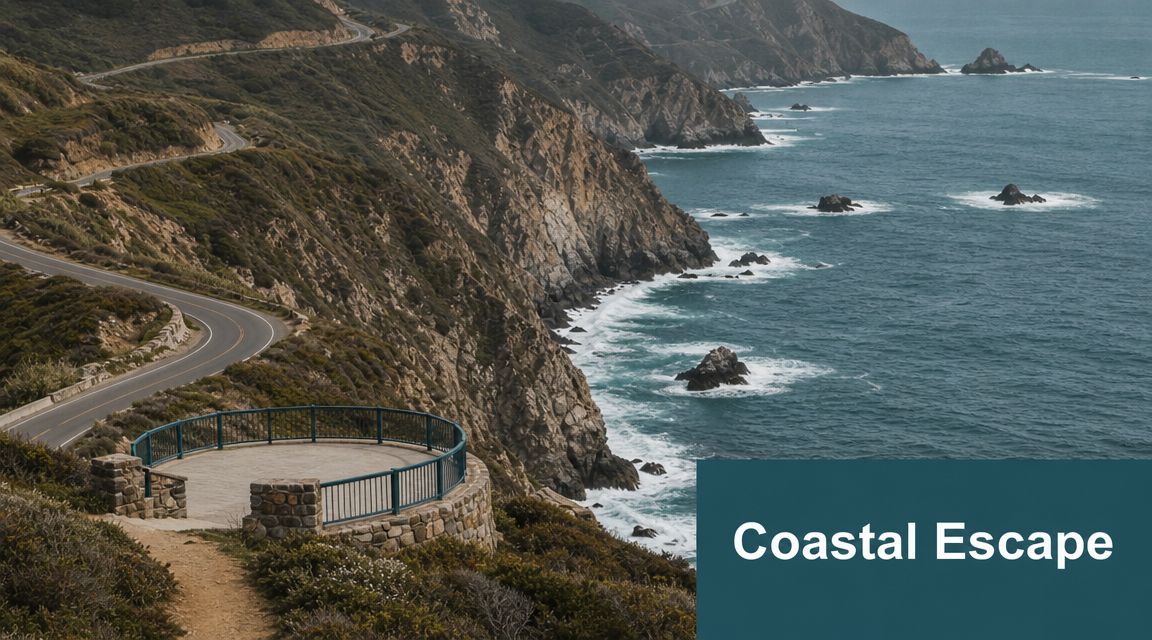
Big Sur's edge is emotional, not convenient. People come for cliffside views, redwoods, and a stay that feels hard to replicate elsewhere in the state.
That means listing presentation has to match the destination. Strong photography, excellent window lines, outdoor seating, and a clear promise of privacy matter more than stuffing the house with generic amenities. In this market, guests often forgive limited nightlife and limited services. They won't forgive a tired interior or poor communication when access gets complicated.
A practical ownership lens helps. If you're considering a purchase in a high-friction market, this overview on how to buy a vacation home covers the broader process well.
Big Sur's best properties often feel effortless to guests because the owner solved the hard stuff in advance.
Big Sur performs best when you market seclusion as a luxury, not as an excuse for inconvenience.
For travelers, this is one of the best california weekend getaways for romance and reset. For owners, it works only if you're willing to operate at a high standard every single stay.
A typical wine-country weekend starts the same way. Guests arrive Friday afternoon, want a good dinner without a long drive, book tastings for Saturday, and expect the home to feel polished enough for photos, conversation, and late nights on the patio. That predictable trip pattern is exactly why Napa and Sonoma stay near the top of the California weekend market for both travelers and owners.
For travelers, the appeal is obvious. Vineyards, restaurants, spa options, and scenic backroads create an easy two or three-night itinerary. For owners, the opportunity is more specific. This market rewards properties that reduce planning friction, photograph well, and support premium occasions such as anniversaries, birthdays, girls' trips, and small group reunions.
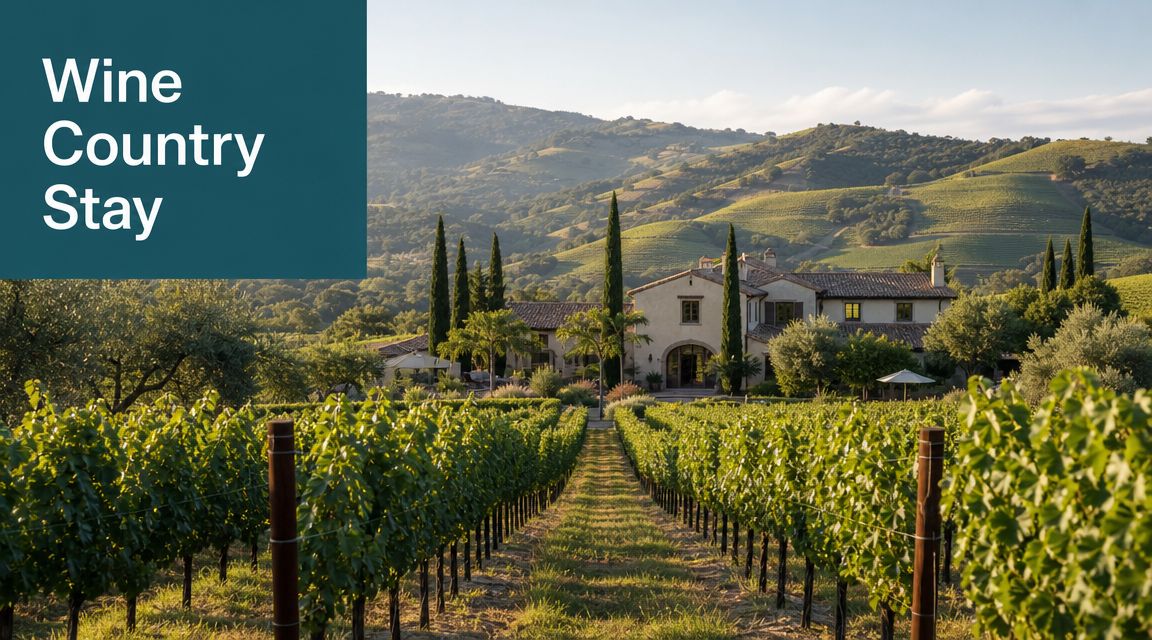
The strongest listings usually fit one of two demand profiles. One-bedroom or smaller homes win with couples by offering privacy, strong design, a soaking tub, outdoor seating, and a location close to tasting rooms or downtown dining. Larger homes perform best when they are organized for adult groups, with enough bathrooms, real dining capacity, quiet outdoor gathering space, and a house layout that feels social without crossing into event-use risk.
Location discipline matters here more than owners sometimes expect. A house with vineyard views can still underperform if every dinner, winery reservation, and grocery run adds too much drive time. In wine country, convenience supports rate. Guests will pay for beauty, but they also pay for an itinerary that feels easy.
Buying in this category also requires more screening than the photos suggest. Before committing to a wine-country property, review the local rules, permit constraints, and revenue assumptions the same way you would for any other short-term rental market. This guide on how to buy Airbnb property in regulated vacation markets is a useful starting point.
The operating trade-offs are real.
I usually put Napa and Sonoma in the "high appeal, high standards" category. Travelers get one of the easiest luxury weekend formats in California. Owners can get strong demand, but only if the home feels intentional, the location supports the itinerary, and the operational plan accounts for regulation, maintenance, and premium guest expectations.
A Friday buyer and a Friday traveler often want the same thing here. They want options. San Diego County works for a quick beach trip, a family weekend near attractions, a low-key inland reset, or a mountain stay with cooler weather. For property owners, that flexibility creates more than broad appeal. It creates multiple demand profiles inside one county, and each one comes with different pricing power, seasonality, and operating pressure.
That range provides a major advantage. A coastal condo near the water can command stronger weekend rates, but it also brings tighter competition, parking headaches, noise sensitivity, and higher guest expectations around design. An inland or mountain property usually trades some headline demand for easier operations, lower wear, and a guest who values space, quiet, and a simpler stay.
San Diego County performs best when the listing matches a clear trip purpose.
I see owners make the same mistake here repeatedly. They buy "in San Diego County" and market too broadly. That weakens conversion. A guest booking Pacific Beach is shopping for a different weekend than someone choosing Julian, La Mesa, or a North County base with easy access to both beaches and family activities.
Specificity wins.
A beach listing should sell walkability, parking clarity, showers, gear storage, and an outdoor setup guests will use. An inland retreat should sell quiet, views, hot tubs, stargazing, or larger lots. An urban-adjacent home should reduce friction by making commute times, neighborhood feel, and attraction access obvious in the first few photos and lines of copy.
For owners still evaluating the buy side, this guide on how to buy Airbnb property in a market with real location and regulation trade-offs is a useful next step.
San Diego County is strongest when the promise is narrow and credible. Beach family base, attraction-focused home, or quiet inland weekend retreat.
For travelers, that means one county can support very different weekend styles without a flight change or a complicated plan. For owners, it means the better investment is rarely the most generic "close to everything" property. It is the home that fits one guest profile clearly, prices to that use case, and can be operated consistently without surprise friction.
The Yosemite gateway region is where the practical investor often beats the aspirational one. Inside-the-park prestige is limited. Gateway-town lodging solves a real traveler problem. People want access, parking ease, kitchen space, and a base they can book without a fight.
That makes the region one of the smarter plays for owners who understand overflow demand. Communities around the park aren't selling the same product as luxury resorts. They're selling convenience, flexibility, and a better fit for families and small groups on a weekend schedule.
Yosemite trips often start with a constraint. Guests couldn't get the exact lodging they wanted, didn't want to pay the peak premium, or decided on the trip later than ideal. A good gateway rental steps in with a cleaner, calmer offer.
That means your listing should answer practical questions before guests ask them. How early can they get to the park? Is there easy parking? Is the kitchen stocked? Are there groceries nearby? Can they return for dinner without hassle? The homes that convert well in this region reduce planning stress.
Nature-themed décor on its own won't save a weak product. If the home feels remote but under-equipped, guests notice immediately.
For travelers, Yosemite remains iconic. For owners, the opportunity sits slightly outside the postcard. The better business is often in the gateway stay that feels easy to use for a tight weekend.
Santa Barbara works best when you lean into refinement instead of trying to compete on activity count. Guests come for a polished coastal weekend: beach walks, Spanish architecture, wine tasting, and dinners that feel a bit special. The wider Central Coast adds flexibility through places like Los Olivos, Solvang, and nearby wine-country pockets that appeal to couples and small groups.
For owners, this is a market where tone matters almost as much as amenities. The strongest listings feel intentional. Better bedding, better photography, better outdoor seating, better local recommendations. Guests don't need a mansion here. They need a property that feels aligned with the destination.
California's lodging forecast points to continued strength statewide. The Visit California regional lodging forecast projects statewide room revenue to rise 5.2% to $28.2 billion in 2026, with ADR expected to increase 2.9% to $196. The same forecast says gateway markets are expected to outperform the rest of the state, with ADR growth of 3.3% versus 1.7% elsewhere. That matters for Santa Barbara and nearby coastal getaway markets because premium leisure and event demand tends to support higher rate ceilings.
This is a strong market for:
The weak approach is going too broad. A beach-town party listing can feel out of sync fast. Santa Barbara and the Central Coast reward restraint.
For travelers, it's one of the most consistently satisfying weekends in California. For owners, it's a market where branding discipline pays.
Mammoth is one of the clearest examples of a destination that demands seasonally intelligent management. Winter is obvious. Snow sports drive awareness and premium bookings. But owners who rely only on ski season leave money on the table, because Mammoth also sells well in summer to hikers, anglers, bikers, and guests who want alpine scenery without the coastal crowd.
The best properties here make gear handling simple. Ski storage, bench seating, drying space, durable flooring, and clear parking instructions punch above their weight. Guests in mountain markets notice utility before style, then reward both if you deliver both.
Some Mammoth listings try to be generic mountain condos. That usually underperforms against homes with a stronger point of view.
A good Mammoth listing changes emphasis by season without changing identity. In winter, it's ski-ready. In summer, it's an alpine basecamp. Same property, different booking trigger.
Mammoth is a strong choice for active weekends, not idle luxury. Guests who want nightlife first may prefer a different destination. Guests who want mountain access and a useful home base tend to be happy here.
The best Mammoth rentals don't try to hide that guests came to spend time outside. They make coming back inside feel easy.
For owners, that's the operating principle. Build for real use, not just listing photos.
A Friday afternoon drive from Los Angeles ends in a very specific kind of weekend: open desert, sharp light, a private yard under dark skies, and a house that feels like part of the trip. That clarity is why Joshua Tree keeps booking well for short stays. Travelers know what they are buying here, and owners can market that promise fast.
For investors, this region rewards differentiation more than broad appeal. Guests often choose the property before they finalize the itinerary. That changes the economics. In Yosemite or Mammoth, location can carry a more average home. In the Joshua Tree region, average usually slips into the middle of a crowded feed.
This is the destination mood in one frame.
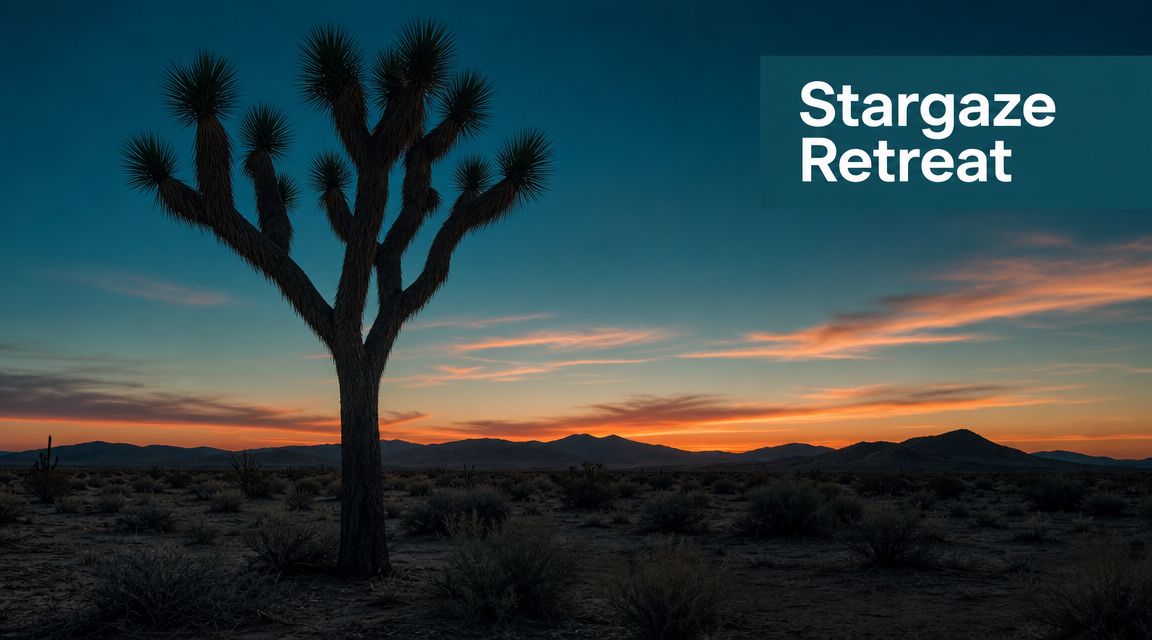
The strongest listings sell a distinct use case. A design-led couple's retreat, a stargazing setup with privacy, a wellness stay with outdoor soaking, or a practical base for climbers all give guests a reason to pick one home over another. Clean architecture helps, but the outdoor experience usually closes the booking.
That means owners should spend carefully. A photogenic plunge pool may help in shoulder season, but shade structures, durable lounge seating, good lighting, and wind-aware outdoor layouts often produce more consistent guest satisfaction. In this market, the patio is part of the bedroom count in the guest's mind. If it is unusable in the afternoon or exposed to neighbors, the photos may still win clicks, but conversion and reviews usually suffer.
Heat is the obvious challenge, but it is not the only one. Desert operations are harder on homes than many first-time buyers expect. HVAC strain, dust, spa maintenance, septic limitations, longer vendor routes, and stricter house rules around fire and noise all affect margins.
A few priorities tend to separate better operators from hobby owners:
For travelers, Joshua Tree works best as a reset weekend with a strong sense of place. For owners, it is a branding and operations market at the same time. Distinct homes can command attention here, but only if the experience holds up after check-in.
Monterey and Pacific Grove offer one of the most balanced weekend products in the state. Families come for the aquarium and ocean access. Couples come for coastal walks and seafood. Pet owners often look for this region because it supports a slower, more flexible kind of trip than some of California's flashier coastal destinations.
From an owner's standpoint, the strength here is breadth. You can market to family travelers, romantic weekenders, and relaxed coastal road-trippers without stretching the truth. That's useful because you aren't forced into one narrow guest segment to fill the calendar.
This isn't the coast for people who need nonstop spectacle. It's the coast for guests who want an easy, satisfying weekend that doesn't require overplanning.
Properties do well when they support that ease. Walkability, parking, pet friendliness, usable kitchens, and simple family layouts all matter. If the home is near waterfront access or an aquarium-focused itinerary, that should be explicit in the listing copy and photo order.
A few setups tend to perform better than others:
For travelers, Monterey and Pacific Grove feel dependable in the best sense. For owners, that dependability is a business asset. You may not get the same hype premium as more trend-driven destinations, but you often get a broader booking audience and fewer expectation mismatches.
A Friday night Tahoe booking often comes from a simple calculation. Guests want to leave the Bay Area or Sacramento after work, arrive without a complicated check-in, ski or get on the lake the next morning, and keep the total trip cost within reason. South Shore and the nearby alpine village communities fit that brief better than many higher-priced Tahoe pockets.
For travelers, that means easier weekend planning. For owners, it creates a different investment case from trophy cabins and ultra-premium lakefront homes. The buyer pool is usually targeting broader demand, not just top-end guests, and that changes how a property should be furnished, priced, and operated.
The strength here is usability. Guests book these areas for access, convenience, and group practicality. A well-located condo or modest cabin with reliable parking, clear winter instructions, and a functional kitchen will often outperform a more ambitious listing that promises a luxury experience it cannot fully deliver.
South Shore works well for short stays because the itinerary is already built in. In winter, guests want quick access to lifts, gear storage, and a warm place to return to. In summer, they want lake access, walkable dining if possible, and enough sleeping flexibility for families or friend groups splitting costs.
That demand profile matters to owners. The best-performing homes in this segment usually serve defined use cases well instead of trying to attract everyone. Two-bedroom and three-bedroom layouts often make the most sense for weekend economics because they can host couples, small families, and ski groups without pushing operating complexity too far.
A few approaches tend to hold up better in this market:
The actual trade-off is margin versus complexity. Entry pricing can be more approachable than top-tier Tahoe inventory, but winter operations are still serious. Snow removal, weather-related guest communication, hot water recovery, and turnover timing all need attention. If an owner underestimates those basics, reviews usually reflect it fast.
This is also a market where honesty converts. Guests do not need a listing to imitate North Shore luxury. They need to know whether the drive is manageable, whether the parking works for two cars, whether the walk to town is real, and whether the unit feels updated, warm, and easy to use.
For travelers, South Shore and the alpine village communities offer one of the most practical Tahoe weekends in California. For owners, they can be a disciplined play: broader guest appeal, clearer positioning, and acquisition costs that may pencil better than the headline Tahoe neighborhoods, provided operations are set up for winter from day one.
| Destination | 🔄 Implementation Complexity | ⚡ Resource Requirements | 📊 Expected Outcomes | 💡 Ideal Use Cases | ⭐ Key Advantages |
|---|---|---|---|---|---|
| Lake Tahoe | 🔄 High, seasonal operations, strict environmental regs | ⚡ High, premium acquisition, professional mgmt, winter maintenance | 📊 High revenue with two seasonal peaks; variable shoulder occupancy | 💡 Premium cabins/condos; ski and summer vacation rentals; corporate retreats | ⭐ Year‑round appeal, lake + ski dual markets, strong nightly rates |
| Big Sur | 🔄 Very high, limited access, strict zoning, coastal maintenance | ⚡ Very high, ultra‑luxury build/maintenance, concierge services | 📊 Ultra‑high nightly rates, low volume, consistent occupancy for luxury market | 💡 Exclusive luxury retreats; branded premium rentals; high‑end getaways | ⭐ Dramatic coastal vistas, pricing power, scarcity/exclusivity |
| Napa Valley & Sonoma | 🔄 Moderate‑high, permit limits and dense competition | ⚡ High, quality property, winery/culinary partnerships, guest experiences | 📊 Strong experience‑driven revenue; peaks at harvest and events | 💡 Boutique wine‑country stays, couples, events, corporate entertainment | ⭐ Established wine tourism, multiple ancillary revenue streams |
| San Diego County | 🔄 Moderate, varied neighborhoods, competitive landscape | ⚡ Variable, wide capex range; partnerships with military/corporate | 📊 Consistent year‑round occupancy; high volume and diversified demand | 💡 Portfolio approach: beach, mountain, family rentals, corporate/military housing | ⭐ Year‑round climate, diverse guest segments, scalable pricing tiers |
| Yosemite Region | 🔄 Moderate, seasonal access, infrastructure limits | ⚡ Moderate, gateway town properties, seasonal maintenance | 📊 Strong summer peaks filling park lodging gaps; reliable visitor flow | 💡 Gateway stays for park visitors; photography and guided‑tour packages | ⭐ Proximity to Yosemite, premium peak rates, captive visitor market |
| Santa Barbara & Central Coast | 🔄 Moderate‑high, high acquisition costs and regs in city areas | ⚡ High, upscale property standards, concierge and event services | 📊 Premium rates and steady occupancy; strong couples/wedding demand | 💡 Romantic getaways, wine weekends, boutique luxury rentals | ⭐ Mild year‑round climate, affluent demographic, wine + cultural attractions |
| Mammoth Lakes | 🔄 High, four‑season operations, winterization needs | ⚡ High, altitude‑specific maintenance, seasonal staffing | 📊 Dual‑peak income (winter ski + summer hiking); strong repeat bookings | 💡 Ski‑focused portfolios, summer alpine retreats, outdoor‑enthusiast rentals | ⭐ Reliable snow, true four‑season demand, resort partnership potential |
| Joshua Tree Region | 🔄 Low‑moderate, seasonal strategy; desert operational needs | ⚡ Low‑moderate, lower acquisition, niche marketing, desert proofing | 📊 Strong winter/stargazing revenue; low or closed summer occupancy | 💡 Stargazing retreats, photography/wellness niches, climbing bases | ⭐ Low entry cost, dark‑sky appeal, strong niche premiums |
| Monterey & Pacific Grove | 🔄 Moderate, family focus, parking and fog considerations | ⚡ Moderate, family amenities, pet‑friendly investments | 📊 Stable year‑round occupancy driven by Aquarium and culinary tourism | 💡 Family aquarium trips, foodie getaways, pet‑friendly stays | ⭐ Marine attractions, steady family demand, temperate climate |
| Lake Tahoe South Shore & Alpine Villages | 🔄 Moderate, competitive market, seasonal maintenance | ⚡ Moderate, lower acquisition than North Shore, family amenities | 📊 Balanced winter/summer income with high volume and holiday peaks | 💡 Budget‑friendly Tahoe rentals, family ski/lake packages, volume plays | ⭐ Lower entry cost, dual‑season demand, permissive regional regs |
A couple books a Friday to Sunday stay from Los Angeles. They want an easy drive, fast check-in, one standout experience, and a home that feels worth leaving town for. That booking pattern drives a large share of California weekend demand, and it explains why some beautiful markets outperform others. The winners are usually the places where guest expectations, local regulations, and property operations line up cleanly.
For owners, the key point is simple. Vacation rentals do not earn on scenery alone. They earn when the market fits a repeatable trip pattern and the home fits the guest's reason for traveling. In practice, that means clear arrival logistics, the right amenity set, accurate pricing by season, and a listing designed for a specific use case, whether that is a couples' wine weekend, a family beach trip, or a hiking base near a national park.
California stays attractive because it serves several demand types at once. Drive-to weekenders fill coastal and wine-country markets. Flight-based leisure supports places like San Diego. Weather-driven travel shapes Tahoe, Mammoth, Yosemite, and Joshua Tree. For investors, that variety creates options, but it also creates trade-offs. A market with strong nightly rates may come with stricter permitting, heavier wear and tear, or shorter peak seasons. A less flashy market may produce steadier occupancy and simpler operations.
That is why destination selection should be treated as both a travel decision and an asset decision.
Travel roundups usually stop at inspiration. Owners need a second layer of analysis. The better question is not only where guests want to go, but where a short-stay property can reliably perform after cleaning costs, maintenance, staffing, seasonality, and local rules are accounted for. Monterey can beat a more famous market for some owners because family demand stays consistent and operations are relatively straightforward. Joshua Tree can produce strong winter returns, but summer softness and desert maintenance need to be priced in from day one. Tahoe can generate excellent peak revenue, but snow operations, exterior upkeep, and storm-related guest communication require real systems.
I also look for markets where the property can solve a practical weekend problem better than nearby competition. Guests booking two nights are less forgiving than guests on a weeklong stay. They want parking that makes sense, a kitchen stocked for one dinner in, fast support if something breaks, and amenities that match the trip type. In wine country, that may be outdoor dining and polished design. Near Yosemite, it may be reliable heating, group-friendly layouts, and accurate drive-time expectations. On the Central Coast, it may be walkability and easy beach logistics.
Management has a direct effect on revenue. A Tahoe cabin without winter prep loses guest trust quickly. A Big Sur or coastal home with delayed maintenance can see small exterior issues turn expensive fast. A Napa or Sonoma listing without sharp photography and local partner recommendations often gets pulled into price competition. Owners who treat operations as part of the investment usually protect margins better than owners who focus only on occupancy.
The strongest California getaway properties are rarely the ones chasing every guest. They know exactly who they serve, what the stay needs to feel easy, and what the market demands operationally.
If you want to turn a California getaway property into a higher-performing asset without taking on the daily work yourself, Global can help. Global combines local market expertise with hands-on revenue management, guest support, housekeeping coordination, and maintenance oversight, so owners can protect the guest experience while improving performance.
Partner with a team that knows Florida—and your home—inside and out. From guest care to local flair, we manage every detail.