


Guests see the welcome basket, the staged coffee station, and the fresh towels. What they don't see are the weak points that turn a smooth stay into a call from the fire department, an emergency plumber, or an insurance adjuster. A practical safety inspection checklist gives you a system for finding those weak points before guests do, and it's the difference between a rental that feels polished and a rental that is safe.
That matters because the inspection burden is real. OSHA reports about 1,850 inspectors overseeing 130 million workers at more than 8 million worksites, roughly one compliance officer per 70,000 workers, and it carried out 34,696 federal inspections in fiscal year 2024 (OSHA data). In that kind of environment, standardized checklists became a core control tool. They're even more useful in vacation rentals, where guests don't know the property the way you do.
Fire safety is the first place I'd start on any rental, because guests won't know where the exits are, how the alarms sound, or where the extinguisher sits when smoke starts moving through a hallway. A good setup is simple, visible, and documented. Hardwired smoke detectors, carbon monoxide detectors, and clearly mounted extinguishers remove a lot of guesswork for guests and a lot of liability for owners.
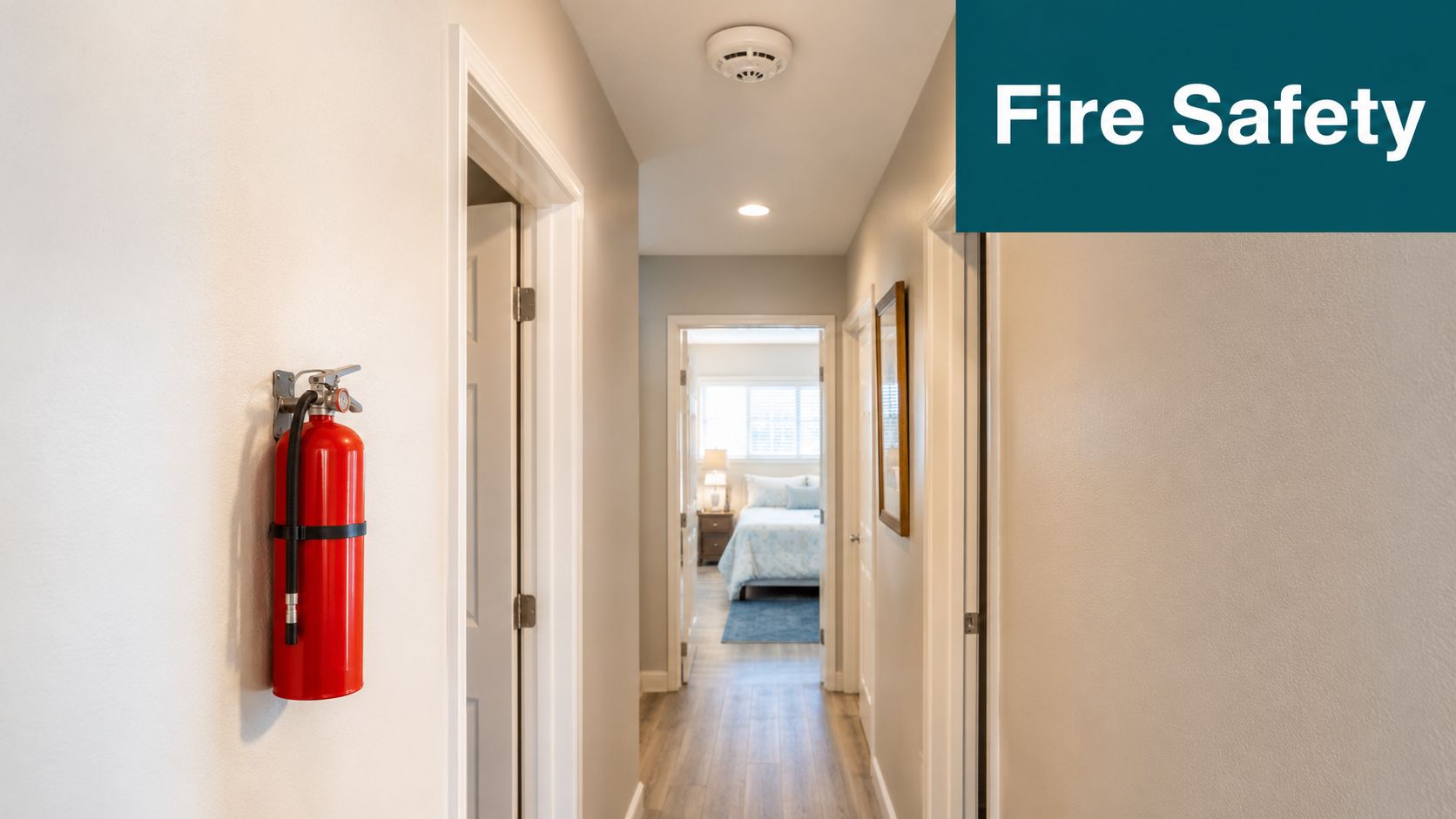
For a rental workflow, the most useful habit is not a one-time walk-through, it's a recurring test-and-log routine. I'd treat smoke detector checks the same way a property manager treats lockout prevention, with a scheduled pass, a photo, and a note in the file. If you're handling insurance questions later, that paper trail matters, and your maintenance log starts to protect you.
Use the internal guide on landlord insurance for short-term rentals as a companion, because fire protection and insurance documentation should always travel together. For roof-related fire resistance context, the HIBCO ROOF LLC fire rating guide is also useful when you're reviewing exterior upgrades.
Practical rule: if a guest can't spot the extinguisher, the evacuation route, and the alarm coverage in under a minute, the setup isn't guest-ready.
A clean printable format for this category works well as a small run of yes-or-no items, with space for date, initials, and notes.
Structural issues are the kind of problem owners like to postpone because the property still “looks fine.” That's a mistake. A rental can look clean, smell fresh, and still have a roof, foundation, wall, or railing problem that becomes expensive fast. The safest properties are the ones that get checked before weather, wear, or a bad repair turns a small defect into a guest injury.
The most disciplined operators don't wait for a complaint, they create a pre-season inspection habit. That's especially smart after storms or major temperature swings, when roofs, exterior walls, and load-bearing elements deserve a closer look. If a property has had code changes or prior repair history, the checklist should reflect that reality instead of copying a generic template.
Checklist formatting works best when the items are grouped by building element, not by vague pass-fail labels.
For vacation rentals in storm-prone markets, the logic is straightforward. You're protecting guest safety and protecting income at the same time, because a closed property doesn't produce bookings. A structural issue also creates scheduling friction, since repairs rarely happen on your preferred timeline.
The best owners build this into a recurring rhythm, not a crisis response. A printed checklist helps, but only if it's tied to a calendar reminder and a repair queue. Otherwise, it becomes another document buried in a folder.
Electrical failures usually stay invisible until a guest trips a breaker, loses power to a room, or reports a burned outlet cover. That is why I prefer a methodical pass through panels, outlets, breakers, appliance connections, and protection near sinks, tubs, and exterior areas. Short-term rentals create heavier day-to-day demand than many owners expect, since guests charge devices in every room, run several appliances at once, and rarely think about circuit limits.
A licensed electrician should handle the deeper review, but property managers still need a field checklist they can use on every inspection cycle. The aim is to catch overloads, loose connections, damaged cords, and poor outlet placement before they turn into a fire risk or a mid-stay outage. Clear labeling matters too, because emergency responders and maintenance techs should not have to guess which breaker controls which area.
A printed routine keeps this category from slipping into the “we'll deal with it later” pile. It also makes documentation easier, since you can date each pass, note the room or circuit involved, and hand the record to an electrician if something needs follow-up.
What works: outlet placement that reduces extension-cord dependence, clearly labeled breakers, and monthly GFCI tests in wet areas.
Electrical risk often starts with convenience items that became permanent. Extension cords are the usual culprit. If a bedroom, desk area, or charging station needs extra capacity, the cleaner fix is a properly placed outlet or a dedicated charging point, not a workaround that stays in service for months. For identifying moisture-related electrical hazards, resources that spots signs of hidden water leaks can help you catch problems before they become safety issues. That is the kind of upgrade guests notice because it works, not because they have to think about it.
Plumbing failures are expensive because they don't stay confined to plumbing. A leak can become a flooring problem, a ceiling stain, a mold concern, and a guest complaint all in one stay. That's why I treat water systems as both a comfort issue and a damage-prevention issue.
The safest workflow is a mix of visual checks and scheduled professional service. You want accessible shut-off valves, an up-to-date water heater, and enough monitoring to catch leaks before they spread. If a property sits on a well or in a rural area, water quality testing deserves real attention, not just a quick glance at the faucets.
This is also one of the best places to add photo documentation, because early water damage is easy to miss in person and even easier to dispute later. If you find a drip pan with staining or a valve that's hard to reach, note it immediately and assign the fix. Waiting until checkout day usually means the problem has already grown.
A useful printable version can be very practical.
For operations, the biggest win is clarity. If a guest reports low pressure or a slow drain, the house manager should know exactly where to look first. That shortens downtime and keeps the complaint from becoming a full maintenance event.
A guest steps into a bedroom that runs warm, finds the living room air stale, or catches a damp smell the moment the door opens. HVAC systems shape comfort in ways that show up immediately in reviews, so this part of the checklist needs mechanical rigor and practical focus. Filters, condensate lines, thermostats, and humidity control all belong on the same inspection sheet because each one affects both guest comfort and complaint volume.
A workable schedule pairs seasonal service with frequent filter changes during periods of heavy use. Smart thermostats help managers spot misuse or unusual temperature swings, but they only matter when someone reviews the readings and acts on them. In humid climates, dehumidification is part of keeping the space healthy and guest-ready, not a nice extra. That means the workflow has to include a clear assignment, a due date, and a place for service notes so the issue does not disappear between turnovers.
A clean HVAC pass is one of the fastest ways to reduce complaints that never should've happened in the first place.
A printable checklist for this category should focus on items staff can verify on site and document without guesswork.
This category works best when it is tied to recurring guest patterns and tracked the same way every time. If a room runs warm each summer, that is not a minor quirk, it is a repeat issue that should move up the repair list. A house manager can compare inspection notes, guest comments, and maintenance records to see whether the problem is a filter issue, a thermostat problem, or a larger system fault. The checklist exists to catch those patterns before they harden into permanent complaints.
Most guest injuries in a rental don't come from dramatic failures. They come from everyday hazards, like a loose rug, a dark walkway, a wet bathroom floor, or a stair tread that isn't obvious at night. That's why this inspection should be brutally practical. You're looking for the places where a guest carrying luggage, kids, or groceries is most likely to lose balance.
I've found that the most effective fall-prevention routine is a slow walk-through at the same time of day guests might arrive, especially if exterior lighting changes after dark. Focus on stairs, bath entries, patios, poolsides, and any floor transition that could catch a foot. Clear, honest documentation matters here because if you fix a hazard, you should be able to prove when it was fixed.
For hosts who want the category to stay organized, a housekeeping cadence helps, and the housekeeping schedule template fits naturally alongside this inspection.
If a surface looks fine in daylight but disappears at night, treat it as a fall risk until you prove otherwise.
A practical printable block for this category keeps corrections visible.
The trade-off here is speed versus thoroughness. A rushed pass may save ten minutes today, but it can cost you a claim, a bad review, or a guest injury later. If the property has repeating trouble spots, build them into every turnover checklist instead of hoping someone remembers.
Pools, hot tubs, spas, and decorative water features raise the stakes fast. They also raise the guest expectation level, which means any lapse in clarity or maintenance shows up quickly. A safe water amenity is not just clean water, it's controlled access, visible rules, and clear emergency readiness.
I'd treat this area as a separate mini-system inside the larger property workflow. That means scheduled testing, documented chemical checks, gate and latch reviews, and a guest-facing explanation at check-in. If you manage a rental with a pool, the renting a home with a pool guide is worth keeping in your operations folder.
The strongest operations teams don't rely on memory for pool safety. They build a routine that a cleaner, a pool service, or a property manager can follow without improvising. That matters because the pool area is one of the few parts of the rental where a small gap can become a serious incident.
A printable inspection set should be short and direct.
For additional gate hardware context, the residential pool gate latch guide can help you compare your setup against common hardware expectations.
Security in a vacation rental is different from security in a primary home. You have frequent turnover, remote check-ins, and a steady stream of temporary codes or key handoffs. That means access control has to be clean, current, and easy to audit. If the lock system is confusing, it creates friction for guests and risk for owners.
Smart locks are usually the right starting point because they reduce key chaos and make code changes easier after checkout. Add exterior lighting, verify camera placement where allowed, and keep access logs tied to the reservation timeline. The point is not surveillance for its own sake, it's reducing unauthorized entry and giving guests confidence that the property is controlled.
Best practice: treat every departure as a security reset, not just a housekeeping event.
A tight printable format helps the team avoid missed steps.
If you need a deeper reference for device selection, the best smart lock for Airbnb guide is a useful companion. The operational lesson is simple, the less your team has to improvise with keys, the better your control over the property.
| Item | Implementation Complexity 🔄 | Resource Requirements ⚡ | Expected Outcomes 📊 | Ideal Use Cases 💡 | Key Advantages ⭐ |
|---|---|---|---|---|---|
| Fire Safety Systems and Equipment | 🔄 Moderate, alarm interconnect, possible suppression installs; routine tests | ⚡ Moderate, detectors, extinguishers, installation & recurring battery/service costs | 📊 ⭐ High, early detection, regulatory compliance, reduced fire/liability risk | 💡 All rentals; multi‑level layouts; properties in fire‑sensitive zones | ⭐ Mandatory compliance, guest safety, insurance benefits |
| Structural Integrity & Building Code Compliance | 🔄 High, engineer assessments, permits, potential structural repairs | ⚡ High, inspections, contractors, permit fees, major repairs | 📊 ⭐ Very High, prevents catastrophic failure, preserves asset value & insurability | 💡 Older properties; coastal/hurricane areas; pre‑listing due diligence | ⭐ Protects guests, prevents large losses, supports financing |
| Electrical Systems Safety | 🔄 Moderate–High, licensed electrician work, panel/upgrades, code fixes | ⚡ Moderate–High, panels, GFCI/AFCI, rewiring, certification costs | 📊 ⭐ High, reduces fire/electrocution risk; supports guest device loads | 💡 High‑occupancy rentals; older wiring; appliance‑heavy units | ⭐ Lowers fire risk, improves safety compliance and guest convenience |
| Plumbing & Water Safety | 🔄 Moderate, leak detection, water quality testing, heater servicing | ⚡ Moderate, plumbers, water heaters, detectors, testing supplies | 📊 ⭐ High, prevents water damage, health risks (Legionella), improves comfort | 💡 Properties on wells/septic; pool properties; older systems | ⭐ Protects guest health, reduces costly emergency repairs |
| HVAC & Indoor Air Quality | 🔄 Moderate, system servicing, filter/vent maintenance, IAQ upgrades | ⚡ Moderate, maintenance, filters, smart thermostats, possible replacements | 📊 ⭐ High, improves comfort, prevents mold/allergen issues, reduces complaints | 💡 Climate‑sensitive markets; allergy‑conscious guests; long‑stay rentals | ⭐ Better reviews, energy savings, healthier indoor environments |
| Slip, Trip & Fall Hazard Assessment | 🔄 Low–Moderate, non‑slip treatments, grip/rail installs, lighting fixes | ⚡ Low–Moderate, grab bars, lighting, non‑slip mats/coatings | 📊 ⭐ High, significantly lowers injury risk and related liability | 💡 Properties with stairs, elderly or family guests, wet areas | ⭐ Reduces claims, improves guest safety perception, often cost‑effective |
| Pool & Water Amenity Safety | 🔄 Moderate–High, compliance with fencing, VGB, gate mechanisms, testing | ⚡ High, weekly service, chemicals, safety equipment, possible upgrades | 📊 ⭐ Very High, prevents drowning/chemical hazards; legal compliance | 💡 Any property with pool/hot tub/spa or water features | ⭐ Essential for legal compliance, minimizes extreme liability, preserves amenity value |
| Security & Access Control Systems | 🔄 Moderate, smart lock/camera integration, policy/procedures setup | ⚡ Moderate, hardware, monitoring fees, occasional maintenance | 📊 ⭐ High, deters theft, enables remote management, documents incidents | 💡 High‑turnover rentals, urban areas, properties with valuables | ⭐ Enhances security, simplifies guest entry, may reduce insurance premiums |
A safety inspection checklist only works when it becomes part of the operating rhythm, not a file you open when something goes wrong. The strongest rental operators schedule checks by category, assign an owner to each task, and keep every result in one system that's easy to review. That's how you turn a paper exercise into a defensible process.
The schedule should match the risk. Fire extinguishers, GFCI outlets, and visible safety items deserve frequent checks because they're guest-facing and easy to verify. HVAC, plumbing, and structural items need less frequent but deeper review, ideally with a licensed professional. Industry guidance on structured digital inspection programs says teams can see a 30–50% reduction in workplace injury rates compared with paper-based alternatives, and it recommends tracking completion rate, average inspection duration, photo compliance, and defect reporting rate to make sure the checklist is doing work (Certainty Software guidance).
That's the difference between a host who reacts and a host who manages. A reactive host fixes what breaks. A managed property has dates, photos, notes, and follow-up built in, so defects don't disappear into inboxes. The best workflow also reflects reality on the ground. Delhi's child-safety checklist audit found 1,677 educational institutions inspected and 774 deficient, with about 46% showing safety shortcomings, which is a strong reminder that checklist-driven inspections are only useful when they're applied consistently and followed through (The Hindu report).
Digital systems make this easier, but software alone doesn't solve the problem. Someone still has to own the inspection cadence, upload evidence, and close the loop on repairs. The global safety inspection software market was valued at USD 520.33 million in 2025 and is projected to reach USD 2,155 million by 2035, with a 15.27% CAGR; the same source says cloud deployment accounts for about 66% of adoption and mobile-based inspection platforms hold around 58% market share, which shows how quickly digital workflows are becoming the norm (Global Growth Insights market report).
For a vacation rental, I'd put the recurring workflow in this order. First, inspect. Second, document. Third, assign repair. Fourth, verify completion. Fifth, archive the proof. That sequence keeps you from relying on memory, and it gives you a cleaner story if a guest, insurer, or contractor ever asks what happened and when.
If you want this handled by a team that already runs the process in the field, Global can build these inspections into the rest of your property management routine. The right partner doesn't just hand you a checklist, it keeps the checklist alive.
If you want your safety inspections handled with less guesswork and more consistency, visit Global to see how local management, maintenance oversight, and guest-ready operations can work together. Their team can fold this checklist into a recurring workflow so your property stays safer, easier to manage, and better prepared for each stay.
Partner with a team that knows Florida—and your home—inside and out. From guest care to local flair, we manage every detail.