


Your bookings look strong. The calendar filled up faster than you expected, guests left happy reviews, and the property finally feels like a real business instead of a side project. Then the tax notice arrives, and the number is bigger than the rough estimate you had in your head.
That moment rattles a lot of first-time vacation rental owners. The surprise usually isn't just the bill itself. It's the feeling that property tax is opaque, fixed, and outside your control. It isn't.
Property tax is a cost you can understand, forecast, and sometimes challenge. Once you know how the pieces fit together, the bill stops looking like a mystery and starts looking like another operating expense you can model, just like cleaning, insurance, and maintenance.
For rental owners, that matters more than it does for many primary homeowners. You may not qualify for owner-occupied treatment. Your tax burden may affect nightly rate strategy. And if you're comparing deals in places like Orlando, the tax line can change whether a property works as an investment at all.
A good starting point is remembering what property tax supports. As Allied Tax Advisors explains property tax, these taxes help fund the local services that make a community function. For an investor, that context matters because your bill reflects both your property and the local system around it.
Think of a property tax bill like a two-part recipe. One part is the value the local tax authority assigns to your property for tax purposes. The other part is the rate applied to that value. If either ingredient changes, your final bill changes.
That simple idea gets buried under official language. You'll see terms like assessed value, market value, taxable value, and millage rate. Most new owners assume they all mean roughly the same thing. They don't, and that confusion leads to bad forecasts.
The core formula is straightforward. Property taxes are calculated by multiplying assessed value by a millage rate, and one mill equals one-tenth of one percent, according to the Institute on Taxation and Economic Policy's explanation of real property taxes.
For a vacation rental owner, understanding property taxes starts with three practical questions:
Practical rule: Never underwrite a vacation rental deal using a seller's old tax bill alone. Their ownership status, exemptions, or assessment history may not carry over to you.
A tax bill isn't just paperwork. It's part of your acquisition math, your annual budget, and your exit strategy. Treat it that way, and you'll make calmer decisions when the next notice lands in your mailbox.
Your first tax notice as a vacation rental owner can feel like opening a utility bill written in another language. The good news is that the bill usually comes down to a few parts you can check line by line, the same way you would review a booking statement for nightly rate, cleaning fee, and platform charges.
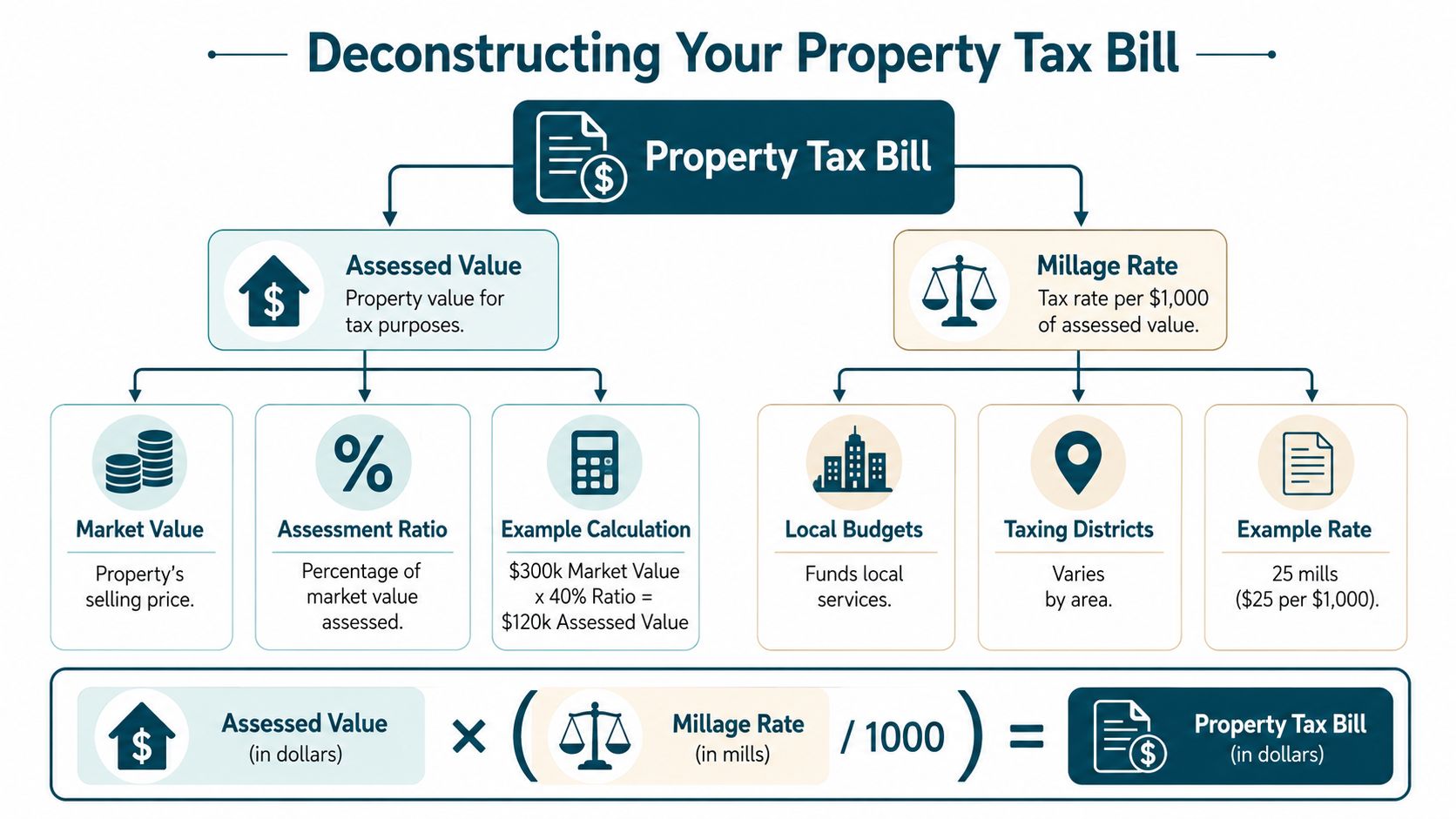
Counties often list more than one value on the notice, and that is where new investors get tripped up. Market value reflects what the property could sell for. Assessed value is the number the local tax system uses to calculate the bill. Taxable value may be lower still if any exclusions or limits apply.
For a vacation rental owner, this difference matters because investor property is often treated differently from a primary residence. If the previous owner had a homestead benefit, their old tax bill may look artificially low compared with what you will owe after closing. That is why a tax notice should be read like an investor, not like a homeowner copying last year's amount into a budget.
A simple way to read it is this: market value is the headline number, assessed value is the working number, and taxable value is the number on which taxes are levied.
A millage rate is the charge applied per $1,000 of taxable value. Your bill may combine rates from the county, city, school district, and special districts. Instead of treating that as clutter, read it like stacked fees on a booking platform. Each line may be small on its own, but together they determine the total cost of holding the property.
This is one reason location has such a direct effect on ROI for short-term rentals. Two homes with similar purchase prices can carry very different tax bills if they sit in different jurisdictions or taxing districts.
Use this order:
That last step is where investors separate themselves from casual buyers. A property tax bill is not just an annual nuisance. It affects cash flow, reserve planning, and your true return after acquisition.
If you track expenses carefully, keep property taxes in their own category rather than burying them inside a general overhead bucket. Good bookkeeping makes it easier to compare forecast versus actual costs and spot when taxes are drifting high enough to justify a review. If you're still setting that up, this guide to accounting software for rental properties can help you organize the expense side of the business.
Practical check: if the bill uses a value, exemption, or classification you do not understand, do not assume the county got it right. Ask for the parcel record and verify each input before you accept the total.
Once you start reading the notice as a formula instead of a mystery document, you can forecast taxes more accurately, catch changes after a purchase, and decide whether the assessment deserves a closer look.
Let's turn the formula into something usable for deal analysis.
Suppose you're evaluating an Orlando vacation rental with a purchase price of $450,000. The exact tax bill will depend on how the local assessor values the property and what combined local rates apply. Because local treatment varies, your goal at the underwriting stage isn't a perfect forecast. It's a disciplined estimate built from the right inputs.
Start with the assessed value used by the county. In some jurisdictions, assessed value may track market value closely. In others, caps, classifications, and local rules can create a gap. That's why investors should always look up the county property record rather than rely on listing copy.
Then identify the local millage rates that apply to that parcel. A vacation rental owner may have county, city, and school-related components rolled together into one bill. You want the combined effect, not just one line item.
| Item | Value/Rate | Calculation | Result |
|---|---|---|---|
| Purchase price | $450,000 | Reference only | $450,000 |
| Assessed value | County-determined | Confirm on assessor record | Varies |
| Combined local millage rate | Local taxing authorities | Confirm by parcel | Varies |
| Estimated annual property tax | Assessed value × (millage rate / 1000) | Apply local formula | Varies |
That table is intentionally simple because false precision is where many new investors go wrong. If you plug in guessed numbers, you'll get a neat-looking answer that may have very little connection to your real future bill.
The biggest mistake isn't bad math. It's assuming a vacation rental will be treated like a primary home.
A prior owner may have benefited from owner-occupied treatment, local caps, or exemptions that don't transfer to you. Once the property becomes a non-homestead, your carrying costs can change enough to alter projected cash flow. That means your tax estimate should be based on your intended use, not the seller's tax history.
If you're buying in a market where occupancy-related taxes also apply to short-term stays, keep those separate in your model. Property tax and hotel or lodging taxes are different buckets, and mixing them makes your ROI analysis messy. For owners studying urban short-term rental rules, this guide on hotel tax in NYC is a useful example of why local tax categories need to stay distinct.
When you're underwriting a deal, don't ask, "What did the seller pay?" Ask, "What will I likely pay once this property is classified and taxed as my rental?"
You buy a vacation rental that looks like a strong deal on paper. The home is in a popular market, the nightly rates look solid, and the seller's old tax bill seems manageable. Then your first full-year tax estimate comes in higher than expected because your property is being treated as an investment asset, not a primary residence.
That gap is why location matters so much.
Two properties with similar values can carry very different tax burdens because property tax is built locally. State rules set the frame, but the bill you pay often reflects county assessments, city levies, school districts, special taxing areas, and local rules about how a non-homestead or income-producing property is treated.

For a vacation rental investor, property tax works like a fixed expense with moving parts. You may not control the tax rate, but you do need to understand what drives it before you finalize your return projections.
The biggest local distinction is often use. A home occupied by its owner can be treated very differently from one held to produce income. That difference may affect exemptions, taxable value growth, and how aggressively reassessments hit after a sale.
New York City shows how large that gap can become. The Community Service Society of New York summarizes findings from the Center for an Urban Future and Citizens Budget Commission showing that the average effective tax rate for rental properties is 4.3% compared with 3.0% for owner-occupied homes in this report summary on New York's property tax system. Your market may not follow New York's pattern, but the lesson holds. Do not assume a vacation rental will inherit the same practical tax treatment as a homeowner's residence.
Short-term rental owners also need to separate property tax from stay-based taxes charged to guests. They are different systems, and mixing them can distort cash flow planning. If you operate or compare deals in dense urban markets, this guide to NYC hotel tax rules for short-term rentals shows how local lodging taxes sit beside, not inside, your property tax bill.
New investors often research tax rates at the state level and stop there. That is like pricing insurance by looking only at the country map. It gives you a rough region, not the actual premium for one address.
Use this checklist before you close:
One address can outperform another for reasons that have nothing to do with nightly rate.
Tax relief programs can still matter, but vacation rental owners need a narrower filter. Many benefits are tied to primary residency, age, disability, military service, or other personal qualifications that may not carry over to an income property. If the home is titled in an LLC, rented for short stays, or used only part-time by you, eligibility can change again.
That is why smart investors ask two separate questions during due diligence. First, what tax breaks exist in this county or city? Second, which ones still apply after this property is operated as a vacation rental?
If you want a practical way to spot whether the issue is valuation, classification, or a missed relief program, this guide to identifying property overpayment is a useful screening step.
When your tax bill feels high, there are two different questions to ask. First, are you entitled to any relief program or exemption? Second, is the property overassessed?
Those are not the same issue, and rental owners often waste time chasing exemptions that don't fit their ownership use while ignoring a realistic assessment challenge.
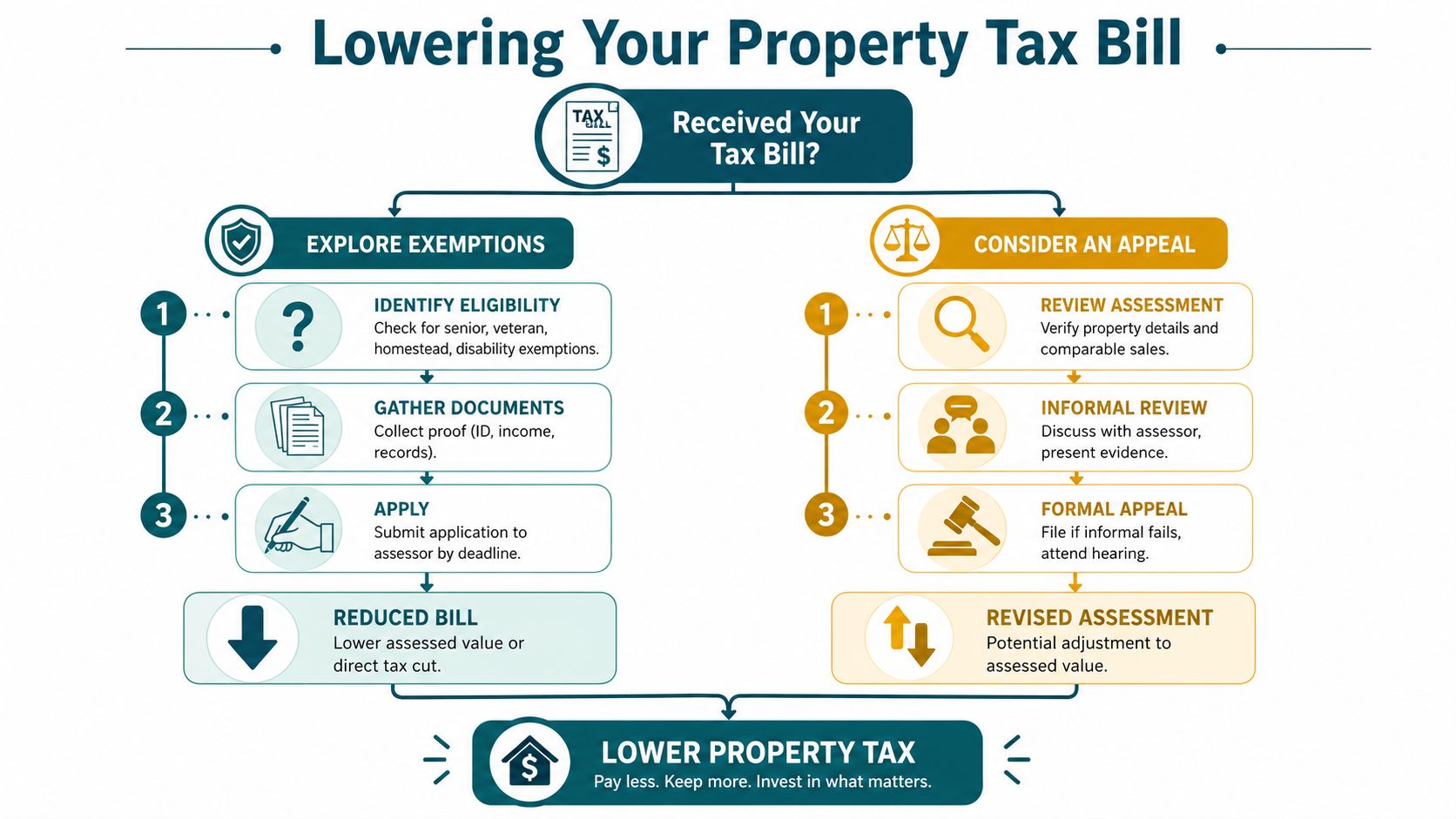
For a vacation rental, broad homeowner relief often narrows quickly. If a program is tied to primary residence, occupancy, age, disability status, or military service, the property's use matters just as much as the owner's status.
Review local eligibility rules carefully and document your ownership structure before you apply. If the property is held in an LLC, used part-time by you, or booked as a short-term rental, those details may affect whether a benefit applies.
A helpful first screen is this guide to identifying property overpayment from New American Funding, LLC. It can help you decide whether the problem is exemption eligibility, overvaluation, or both.
An appeal is strongest when you treat it like a valuation case, not a complaint. The evidence that tends to matter most is practical and property-specific:
The process usually starts informally. That matters because formal hearings take more time and preparation than many owners expect. In Allegheny County, over 40% of informal reviews result in adjustments without formal litigation, according to this Pittsburgh property tax and assessment overview. That doesn't guarantee a similar outcome elsewhere, but it does show why the informal stage deserves serious effort.
Investor move: Ask for an informal review first, and walk in with comps, photos, and a concise valuation argument. Emotion rarely lowers an assessment. Documentation sometimes does.
Read the assessment notice carefully
Confirm the property facts first. Incorrect basics can undermine the whole value.
Pull relevant comps
Focus on nearby properties that are similar in size, condition, lot characteristics, and use.
Organize your file
Put your best evidence in a short packet. Don't bury the key points under unrelated documents.
Request the informal review
Be polite, direct, and specific. You're trying to show valuation error, not vent frustration.
Escalate only if needed
If the value still looks unsupported, move to the formal appeal within the deadline.
Lowering an inflated assessment doesn't just reduce one bill. It can improve annual cash flow, sharpen your net operating income, and make your hold strategy more resilient when bookings fluctuate.
If you already track deductible expenses, pair your appeal review with a clean tax file. A checklist like this one for rental property tax deductions helps keep your records organized while you evaluate the property tax side.
A good appeal file does two jobs at once. It can support a lower assessment now, and it creates a record you'll be glad to have next year.
Strategic investors don't treat property tax as a bill that appears after closing. They treat it as a variable that shapes whether the deal deserves to close at all.

When you're reviewing a potential vacation rental, build a property tax estimate into your operating expense line from the beginning. Don't wait until after inspection. Don't wait until after financing. And don't use a casual placeholder just because the deal otherwise looks attractive.
Property tax affects NOI, cap rate, and cash flow directly. If you understate it, the property looks more profitable than it really is. That distortion can lead you to overpay on purchase price or overestimate what the property can comfortably support in debt service.
Use a routine like this:
For investors trying to map the whole tax picture, operational tax planning matters alongside property tax planning. Resources such as maximize tax benefits with INTELLI can help you think more broadly about rental property tax treatment without confusing deductions with local property taxation.
The safest underwriting assumption is not the lowest plausible tax bill. It's the tax bill your business can survive if the county takes a less generous view than the seller did.
Even if you own one vacation rental, act like an operator with a portfolio. Review taxes at least once a year alongside insurance, maintenance reserves, and revenue trends.
If your bookings rise, that doesn't automatically mean your tax burden will follow in lockstep. But if the county reassesses, if your classification changes, or if you miss a challenge window, your margin can tighten fast. That's why understanding property taxes isn't just compliance work. It's asset management.
Your first tax bill as a vacation rental owner can feel like the moment your spreadsheet meets reality. The purchase math looked clean. Then the county notice arrives, and the tax line suddenly has more influence over cash flow than many new investors expected.
That is why tax awareness belongs at the front of your investment process, not at the end. A strong operator treats property tax the same way they treat nightly rate assumptions, occupancy forecasts, insurance, and repair reserves. It is part of underwriting, part of annual review, and part of protecting ROI.
For vacation rentals, the practical mindset is simple. Assume the property will be taxed based on how the local authority sees its current value and use, not how the seller's past bill looked. Non-homestead status often changes the economics. Reassessments after a sale can change them again. If you plan for both, you make better buy decisions and avoid surprise pressure on margins.
Keep this checklist close:
One concept to keep in the background is land value taxation, or LVT. It taxes land differently from the structure sitting on it. That distinction can matter if you invest in areas with rising land values, redevelopment pressure, or zoning changes, because future tax exposure may not track building value in the way many owners assume.
Good tax planning will not make the bill disappear. It will help you forecast it more accurately, challenge it when the assessment is off, and protect the return your rental needs to produce.
If you want a clearer picture of whether a vacation rental will perform after taxes, management, and operating costs, explore Global. Its local-market approach and income tools can help owners make more grounded investment decisions before small forecasting mistakes become expensive ones.
Partner with a team that knows Florida—and your home—inside and out. From guest care to local flair, we manage every detail.